
WHY WE STILL SPIN
A Collector’s Reflection on Records, Rituals, and the Culture that Keeps Record Collecting Alive - By Andrew Cashin

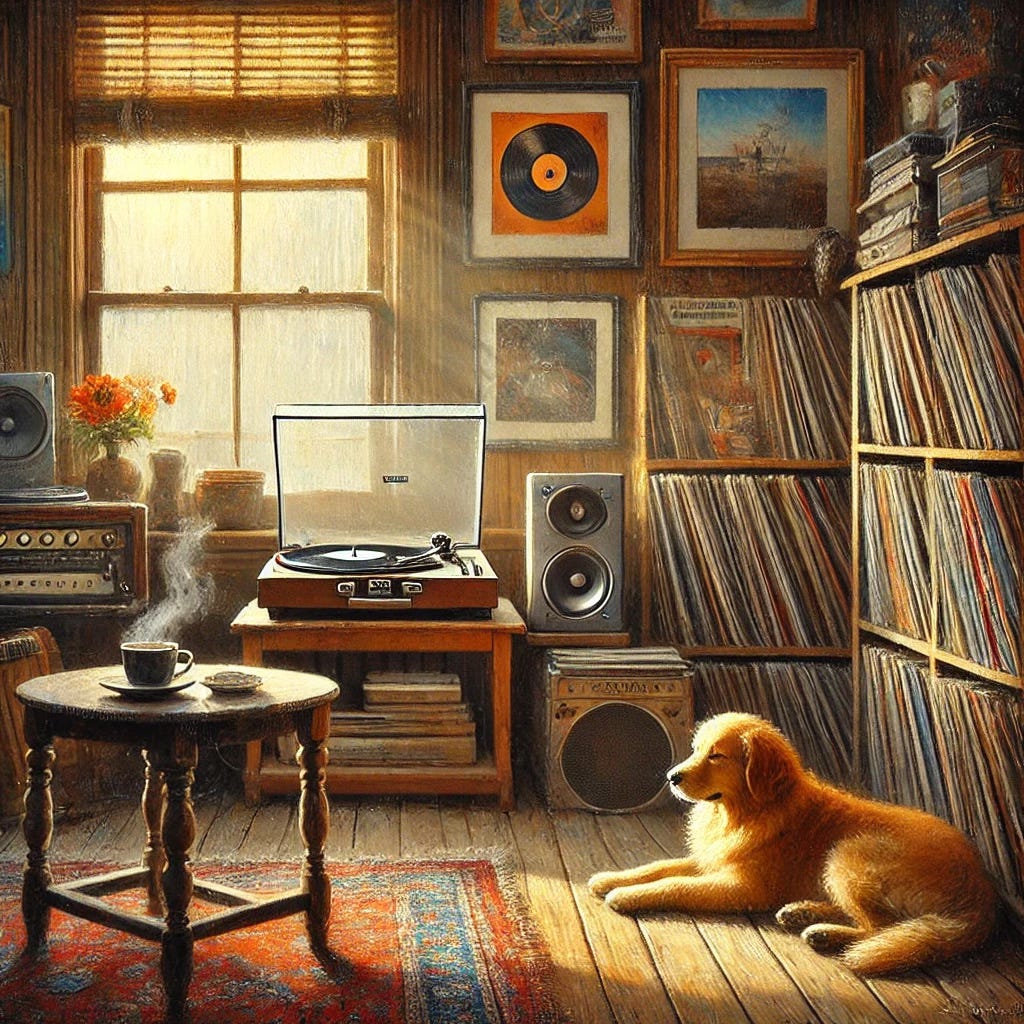
The Return to the Record
Sometime mid 2017, I was digging through a box of LPs at a shop on Queen East, half looking, half killing time, when I pulled out “The Universe Smiles Upon You” by Khruangbin. The store owner nodded when he saw it in my hand. “Good one,” he said. “You’re gonna want to give that your attention.”
That record didn’t just bring me back into collecting with both feet, it reminded me that vinyl has never really been about owning things. It’s about finding moments. And in a world spinning faster by the day, records are one of the few things that ask you to slow down and stay awhile.
What we call a “vinyl revival” is really a return to intention. For some, it’s driven by nostalgia. For others, by curiosity. For me, it’s always been about connection. With music. With memory. With each other.
I’ve spent most of my adult life developing live, large scale corporate events, building communities, and thinking about how we gather and I can tell you this: records still bring people together in ways that few things do. You don’t need a social media strategy to bond over a Miles Davis record or a crate of old soul 45s. You just need time, a turntable, and someone willing to listen.
It Starts with Memory
A lot of the people I talk to about records, whether they’re longtime collectors or brand-new diggers, trace their love back to a single memory: their dad’s Sunday morning records, the first LP they bought with birthday money, or the album that saved them in high school.
I’ve got a few of my own. The first time I heard “The Queen Is Dead”. Hearing “Revolver” in full on a proper stereo for the first time. Spending hours as a teenager arranging and rearranging my small stack of LPs, as if the order itself said something about who I was.
That’s the thing: records aren’t just things we collect. They’re reflections. Soundtracks to who we were, and who we’re becoming.
I wrote Zen and the Art of Record Collecting as a way to make sense of this, to ask what we’re really doing when we chase a pressing, or rearrange our shelves, or stare at an album jacket like it’s a window to another life. What I came to realize is that vinyl isn’t about escape, it’s about presence. It gives weight to time. Texture to memory.
From Obsession to Intention
When people first get into record collecting, especially now, they often go wide. Everything looks exciting. Limited editions. Colored wax. Picture discs. They want the full bookshelf look, the “wall of sound,” the visual aesthetic. I get it. I’ve been there.
But over time, something shifts.
You start to care less about quantity and more about meaning. You keep the albums that carry weight, the ones tied to specific times, people, or feelings. The ones you pull out not because they’re valuable, but because they matter.
I’ve been collecting records for decades, and my shelves have changed more than once. I used to chase full discographies. Now I chase feeling. The LPs I hold onto are the ones that evoke something specific: a quiet morning in Cobourg, a pub in Liverpool, a gig I saw at The Rivoli, a night at home with my son and wife, Kelly and Rhys.
When we started the East Side Vinyl Society, it wasn’t to create an exclusive club, it was to make space for conversations like this. For record lovers to talk about why they collect, not just what. To trade stories.
And in those conversations, I’ve noticed something: whether you’re 25 or 55, whether you’ve got 20 records or 2,000, the common thread isn’t nostalgia, it’s attention. Records make you pay attention. To the music. To your mood. To what matters.
The Ritual is the Point
I don’t skip tracks on a record. That’s not a moral stance, it’s just inconvenient. And that inconvenience is part of the appeal.
With streaming, skipping has become a reflex. A half-listen. A “meh” and a flick of the thumb. But vinyl doesn’t work that way. It slows you down. It keeps you in the room. It holds your attention, start to finish, in a way that few things do anymore.
The act of playing a record, pulling it from the sleeve, brushing it clean, placing it gently on the platter, lowering the tonearm, is a kind of ritual. You don’t press play. You prepare to listen. And that matters.
In Zen and the Art of Record Collecting, I talk about this process as a form of active listening. Ritual might sound like a heavy word, but it’s the right one. You’re not just hearing music, you’re entering into something. You’re tuning yourself, not just the turntable.
Collectors know this. The more time you spend with your records, the more you start to develop your own rituals. The way you file your records. The order you play them in. The system for keeping track of condition, labels, pressings. There’s a care to it. And that care becomes part of the experience.
It’s not about perfection. My copy of “London Calling” (well, one of the copies) is scratched to hell, but it still plays, and I still love it. In fact, I probably love it more because of the imperfections. They remind me that music isn’t supposed to be clean or flawless. It’s supposed to move you.
Not Just Music, But Object
There’s no way to overstate the power of the physical object. Album art isn’t just packaging. It’s part of the message. It sets the tone before the first note even plays.
As a kid, I used to study LP covers like they were maps. Where is this band taking me? What’s hidden in the liner notes? What do these credits mean? Who is the producer? What’s on the dead wax?
The visual side of the record is a huge reason why so many new collectors are getting into it now. Scroll through Instagram or TikTok and you’ll see it, people displaying their turntables, their colored pressings, their perfectly stacked IKEA shelves. Is it aesthetic? Sure. But it’s also meaningful. It says something about who they are, what they value, how they want to live.
That said, I think a lot of collectors eventually move past the aesthetic phase. The novelty wears off. What’s left is the emotional core: how a record makes you feel. That’s why you end up with shelves that look less like a mood board and more like a diary.
Some of my favorite records are ones that would mean nothing to anyone else. A bootleg I bought at a market in Amsterdam. A scratched-up Trojan Records compilation I found for a dollar. A Style Council 7” I picked up after a Liverpool match in Cardiff. None of them are “grails.” All of them are sacred to me.
Record Stores as Community Spaces
Every city has a few record shops that feel like home. In Toronto, I’ve got my go-tos—Pop Music, Dine Alone, Baxters, Kops... in Cobourg, it’s always a good day when I get to pop into Zap Records, to see the people, equally as much as the records.
These shops are more than storefronts. They’re informal archives. Listening posts. Hangouts. Places where conversations can range from reissue mastering to the merits of Japanese pressings.
What matters is that these places create space. Physical space. Space to browse, to ask questions, to bump into people you wouldn’t otherwise meet. And it’s in these spaces that vinyl culture really lives, not in the numbers or the trend pieces, but in the quiet, thoughtful act of picking up a record and deciding it’s the one.
Record Store Day plays into this. Say what you want about the crowds or the flippers or the hype, but the energy on RSD is real. And for many people, it’s the first time they feel like part of a larger community.
I’ve lined up with friends, with strangers, with a coffee in hand and a list in my pocket, just hoping to get that one special pressing. And even if I don’t walk out with what I came for, I always leave with something unexpected. A conversation. A recommendation. A reminder of why I started collecting in the first place.
The Digital Piece of the Puzzle
Let’s be honest, without digital tools, my collecting habits would be a lot messier. I’d forget what I already own, buy (more) duplicates, and probably miss out on more than a few hard-to-find LPs.
I use Discogs regularly. Not just for cataloging, but to understand the history of a pressing or chase down a specific year and label. It’s become a core part of the experience. Not a replacement, but an extension.
Social platforms have changed things too. Instagram, Bluesky and Facebook are filled with people showing off setups, asking questions, debating the best pressing of Kind of Blue (again). Some of it’s performative. Most of it isn’t. I’ve had real conversations start from a single post, connections with collectors in different countries, or younger people just getting into collecting, asking where to start.
That’s something I never expected when I got back into collecting seriously. For all the talk of screen time pulling us apart, digital platforms have helped grow this community. I see it with the East Side Vinyl Society, people DM to ask when the next meetup is, or send me a photo of a record they just picked up because they know I’ll appreciate it.
So no, the digital world hasn’t killed vinyl culture. In many ways, it’s helped it flourish. It’s expanded what community can look like. The key is not to mistake the digital tools for the experience itself.
Streaming offers access. Records offer presence. And the best listening setups I know use both, Apple Music (my preference) to discover, Discogs to track, and the turntable to experience.
Across Generations
One of the most fascinating things about collecting records right now is how it bridges generations, but for different reasons.
People my age are often circling back to records they once had, or wish they’d kept. It’s less about discovery and more about reconnection. A way to ground ourselves in a time when everything feels unanchored. There’s comfort in pulling out Ocean Rain, Fugazi, Head on the Door or Ill Communication, and remembering who you were when you first heard them.
But younger collectors, they’re starting fresh. They weren’t there when those records came out. And that gives their interest a kind of clarity. They’re not chasing youth, they’re creating meaning. I’ve talked to teens, my own son, who care more about mono pressings than TikTok trends. It’s not irony. It’s curiosity.
When Rhys started poking through my collection, I expected polite interest. Instead, I got real questions. He wanted to understand the difference between analog and digital sound. He asked why some albums had different mixes depending on the region. He wanted to know what made certain labels more collectible. It reminded me that this isn’t a dying format, it’s a living one.
And that’s the real strength of record collecting right now. It adapts without losing its shape. It invites people in without asking them to change who they are.
A Culture Made by Collectors
The vinyl world isn’t led by corporations. It’s shaped by collectors. People who care enough to argue about pressing quality, who still write liner notes, who host pop-ups and sales and run niche labels from their basements.
It’s my mate Caullyn opening the Flying Squirrel Motorcycle Cafe and spinning music while coffee flows, for example, did you know that everything is “Better as Mariachi”? It’s DJs like Keef digging for 45’s to build a perfect set. It’s hobbyists sharing shelf tours and deep cuts online. It’s parents passing on their collections. It’s artists pressing their albums independently, not because it’s efficient, but because it feels right.
The culture is held together by participation. That’s why it hasn’t faded like other “comebacks.” Vinyl collecting doesn’t reward passive interest. It asks for effort, for time, for curiosity. And the people who show up, again and again, build something stronger than trends.
What We’re Really Collecting
I’ve had people ask me, usually with a mix of confusion and fascination, “Why go through all this trouble when you could just stream anything you want?”
It’s a fair question. And the answer isn’t just about sound quality or nostalgia or some romantic attachment to analog. It’s about engagement. Intimacy. Focus. Records demand something of you and in return, they offer a kind of connection that’s hard to find elsewhere.
When I look at my collection, I don’t see inventory. I see a living archive. Not just of music, but of my own experiences. There’s the LP I picked up on a rainy day in Montreal. The rare repress I traded for in Kensington Market. The obscure ambient album that got me through a tough week. Each one holds a piece of time, a version of me, a context that adds weight to the music.
And this, I think, is the heart of it. We’re not just collecting records. We’re collecting presence. A way to be with music fully, hands, ears, eyes, memory all engaged.
Looking Ahead
Vinyl isn’t going anywhere. Not because it’s trendy, and not because it’s making a “comeback,” but because it offers something we still need: a break from the noise. A place to land. A reason to sit still for twenty-five minutes.
What I’ve seen through the East Side Vinyl Society, through conversations at record stores, and even through my own writing, is that vinyl culture isn’t just alive, it’s evolving. Thoughtfully. Slowly. With care.
Younger collectors are reshaping what it means to dig. Older collectors are finding new reasons to stay curious. Independent shops continue to act as cultural outposts in towns big and small. And across every generation, people are finding meaning in music that they can hold.
When I wrote Zen and the Art of Record Collecting, I wasn’t trying to romanticize the past. I was trying to understand the present. What does it mean to care deeply about something analog in a world that runs on speed? What do we gain when we move toward slowness and tactility and ritual?
I didn’t come to a single answer. But I came to this: the act of collecting records isn’t about the records. It’s about how we live with them. What they give back. How they help us remember, reflect, and maybe most importantly, listen.
And in that way, every LP is a kind of conversation. Between artist and listener. Between past and present. Between who we were and who we’re becoming.
If that’s not worth collecting, I don’t know what is.